



Compact Medium-Voltage Switching Technology Evolves with New Grid Requirements
Urban Networks Increase the Value of Compact Designs
The electrical industry is seeing renewed demand for compact medium-voltage equipment as urban substations, commercial developments, renewable-energy connections and industrial facilities face increasingly limited installation space. The International Energy Agency forecasts global electricity demand to grow by an average of 3.6% annually from 2026 to 2030, adding about 1,100 TWh each year and increasing pressure on distribution infrastructure.
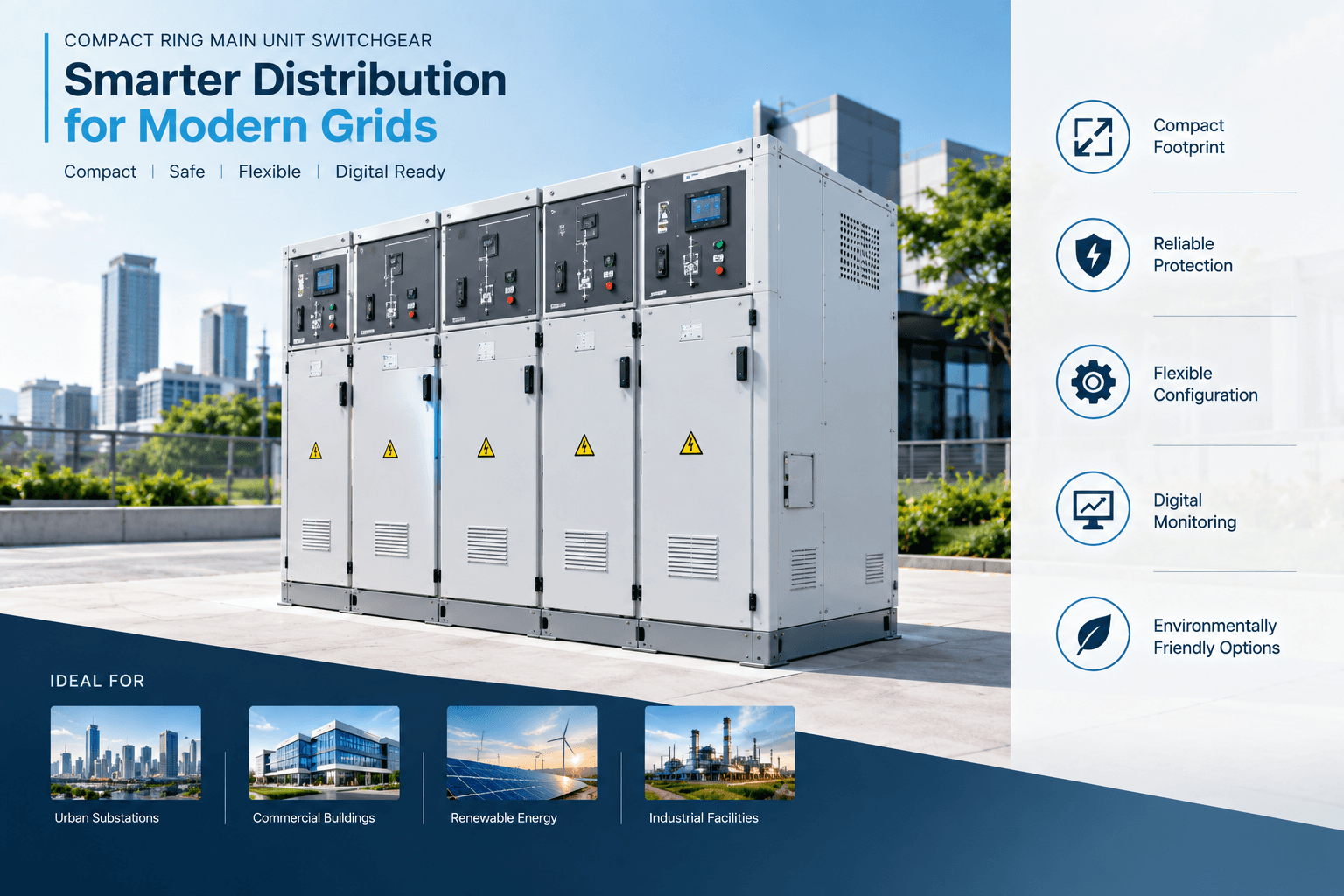
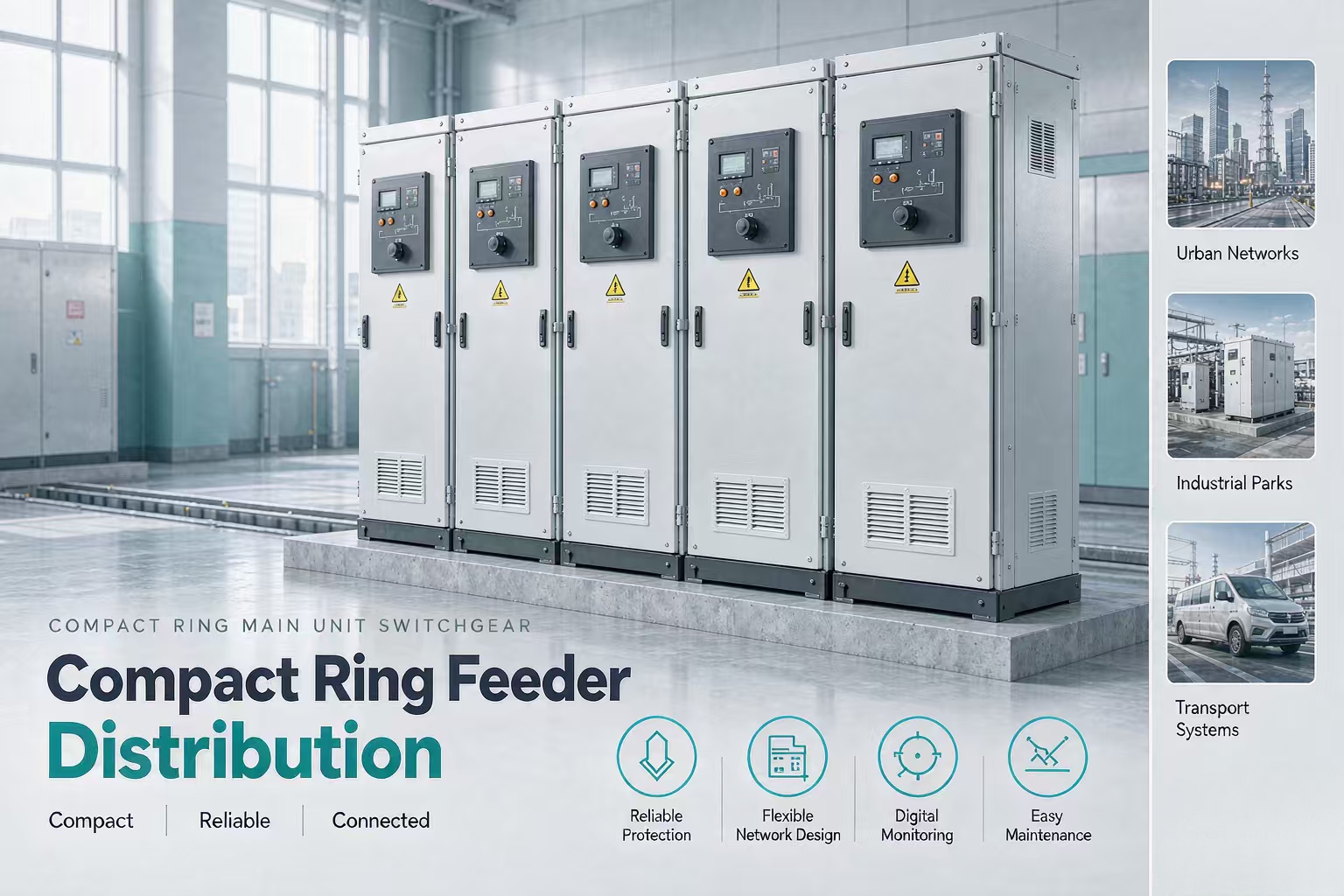
In this environment, Compact Ring Main Unit Switchgear is being developed around smaller footprints, simplified installation and greater operational flexibility. The equipment is commonly configured for medium-voltage distribution and can help integrate switching, protection and cable connections within a confined area.
Technical Requirements Move Beyond Basic Switching
Current selection criteria increasingly include rated voltage, short-circuit withstand capability, insulation performance, mechanical endurance and environmental protection. IEC 62271-200:2021+A1:2024 applies to prefabricated metal-enclosed switchgear for AC systems above 1 kV and up to 52 kV, covering both indoor and outdoor installations.
Environmental requirements are also changing the technology roadmap, particularly in Europe. Under the revised EU F-gas regulation, putting into operation new medium-voltage switchgear for primary and secondary distribution up to 24 kV that uses fluorinated greenhouse gases in its insulating or breaking medium is prohibited from 1 January 2026, subject to specified derogations. This is encouraging greater consideration of alternative insulation and interruption technologies.
Dimensions Become a Practical Engineering Constraint
For compact distribution systems, physical dimensions can directly affect building layout, transport and installation work. A recent utility technical specification for 24 kV equipment sets maximum single-cell widths of approximately 400–520 mm, depths of up to 900 mm, and overall height of about 2,000 mm, illustrating the space requirements that designers may need to accommodate. Actual dimensions vary according to feeder arrangement, protection functions and cable configuration.
As a result, modular layouts and reduced cable-termination space are receiving greater engineering attention, particularly in urban substations and constrained commercial sites.
Digital Monitoring Adds a New Layer of Functionality
Compact equipment is also becoming more closely connected with digital distribution management. Sensors for temperature, operating status and circuit conditions can provide data for remote supervision and condition-based maintenance. This is relevant as grid operators face more complex power flows and record connection queues; the IEA reports that more than 2,500 GW of renewable, storage and large-load projects remain stalled in grid-connection queues worldwide.
The development of Compact Ring Main Unit Switchgear is therefore moving beyond simple size reduction. Future designs are increasingly expected to balance footprint, environmental performance, safety, monitoring capability and installation efficiency according to the requirements of specific distribution networks.