


Compact Ring Main Unit Switchgear Evolves for Flexible and Intelligent Distribution
Compact Distribution Becomes More Valuable in Dense Networks
Electricity distribution is being reshaped by urban development, decentralized generation and the growing number of connection points within existing networks. A January 2026 market assessment estimated the global ring main unit market at USD 3.33 billion in 2026, with projected growth to USD 5.31 billion by 2033, representing a compound annual growth rate of 6.9%. The market study identifies utilities, industrial facilities, commercial infrastructure and renewable-energy applications as major demand areas.
Ring Configuration Supports Network Continuity
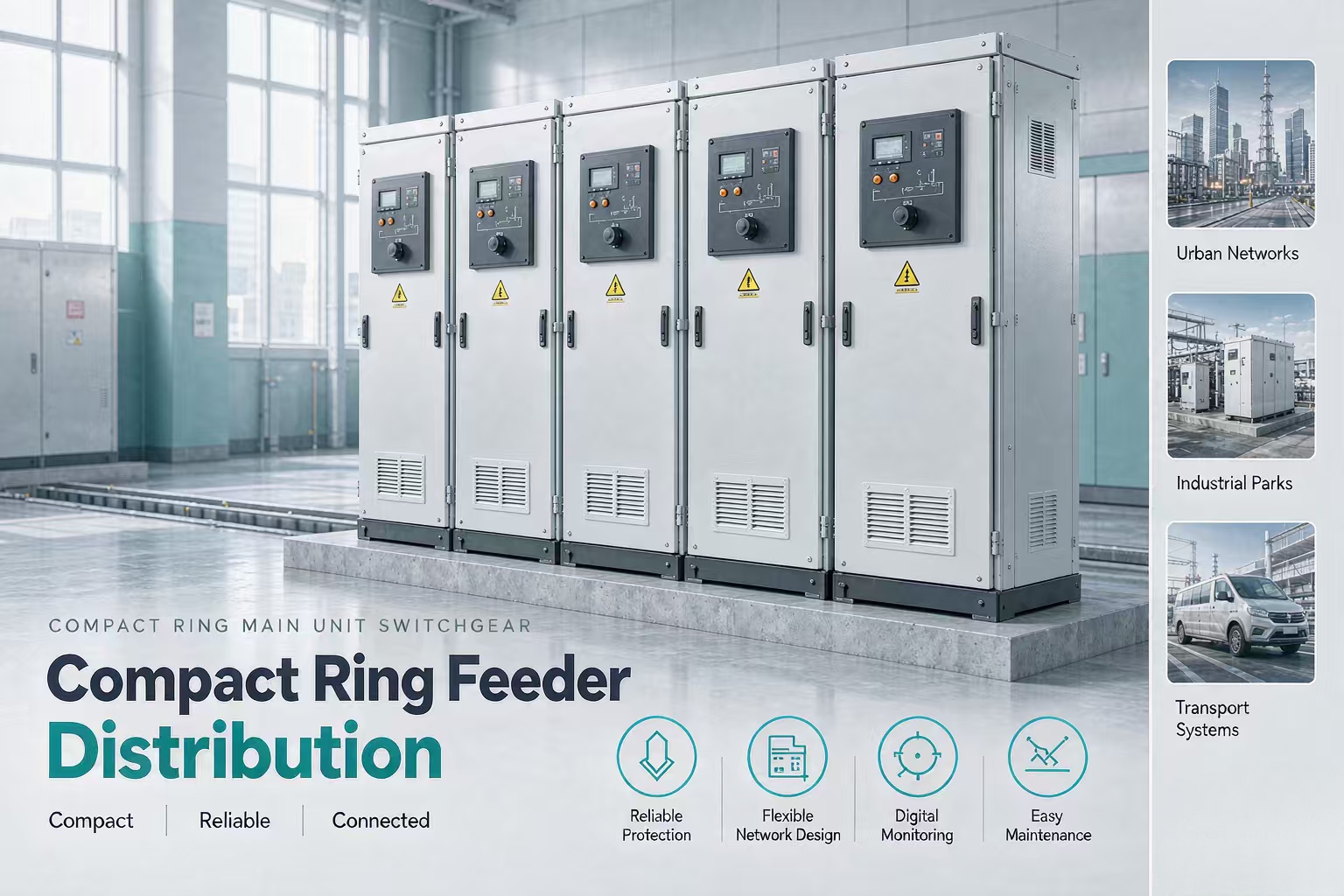
One of the main advantages of this architecture is its suitability for ring-shaped distribution networks. By dividing a feeder system into manageable sections, operators can isolate a faulted portion while maintaining supply to other sections when the network design permits. This can be especially useful in urban districts, industrial parks, transport facilities and other loads where extended interruptions can create operational costs.
The equipment also supports different protection arrangements. IEC 62271-103:2021, with a 2025 corrected version, covers AC switches and switch-disconnectors for rated voltages above 1 kV up to and including 52 kV, including indoor and outdoor installations.
Environmental Performance Is Becoming a Design Priority
Equipment selection is increasingly influenced by insulation technology as well as electrical performance. The latest IEC 62271-201:2026 introduces requirements for solid-insulation enclosed switchgear for systems above 1 kV and up to 52 kV, reflecting continued development of alternative insulation approaches for medium-voltage distribution.
For users, the choice of insulation technology can affect equipment footprint, maintenance practices, environmental considerations and system design. The appropriate solution depends on voltage level, installation environment, operating frequency and local regulations rather than on a single technology being universally preferable.
Digital Functions Improve Visibility and Maintenance
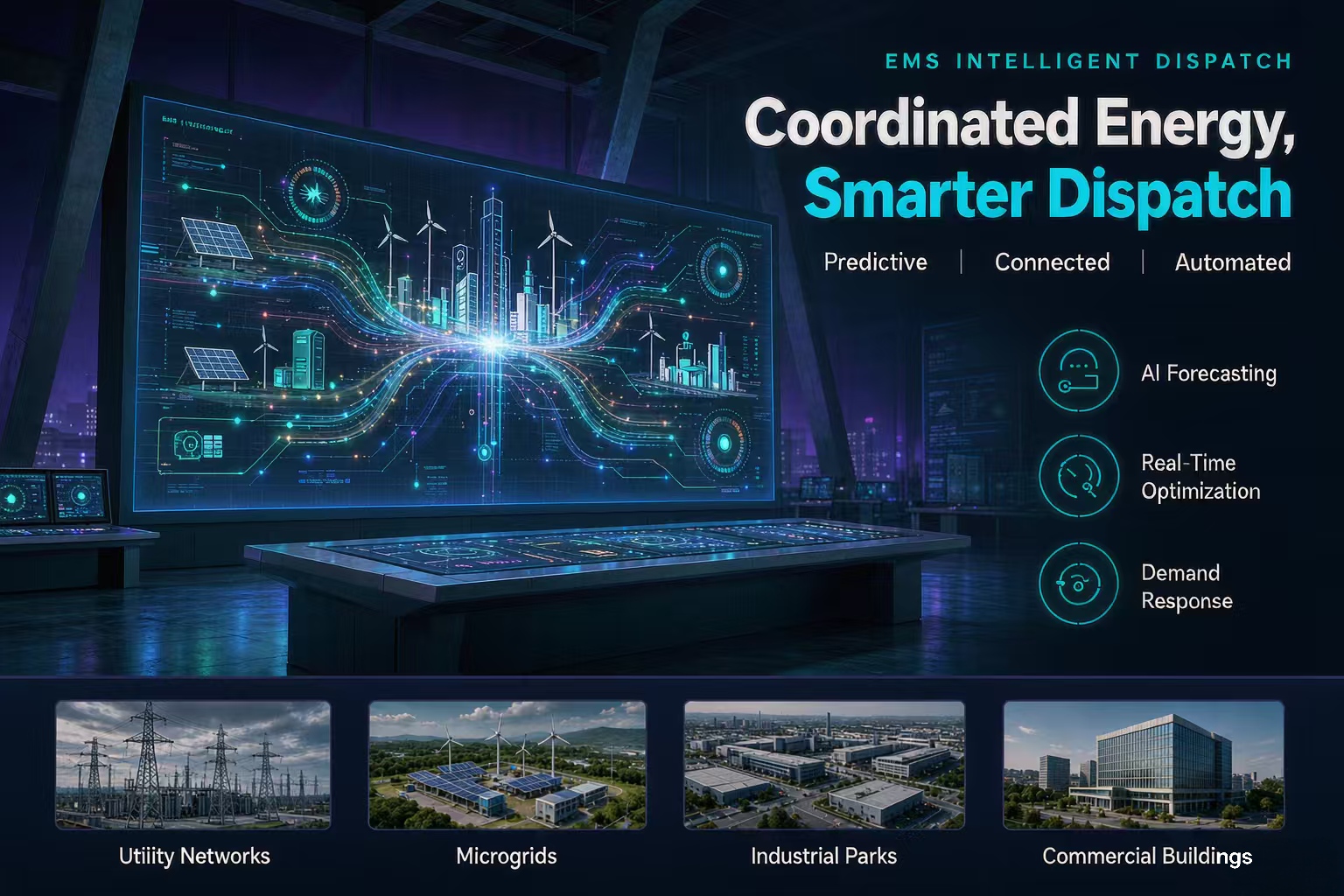
Smart distribution equipment is also moving toward more connected operation. Sensors, communication interfaces and remote switching can provide information on circuit status, temperature and other operating conditions. European grid-technology guidance indicates that digital secondary substations can reduce operational and maintenance costs by approximately 5% to 30%, depending on the level of digitalization and automation deployed.
This makes remote monitoring particularly relevant for substations distributed across large industrial sites or urban networks, where frequent manual inspection may be inefficient.
Future Development Focuses on Integration
The next generation of Compact Ring Main Unit Switchgear is likely to combine compact construction with stronger automation, alternative insulation technologies and improved data connectivity. Rather than pursuing size reduction alone, manufacturers and system designers are increasingly evaluating equipment according to network topology, maintenance strategy, environmental requirements and digital-operation needs.
The broader direction suggests that compact medium-voltage distribution equipment will increasingly function as an active network node, supporting not only switching but also faster operational decisions and more adaptable electricity distribution.