
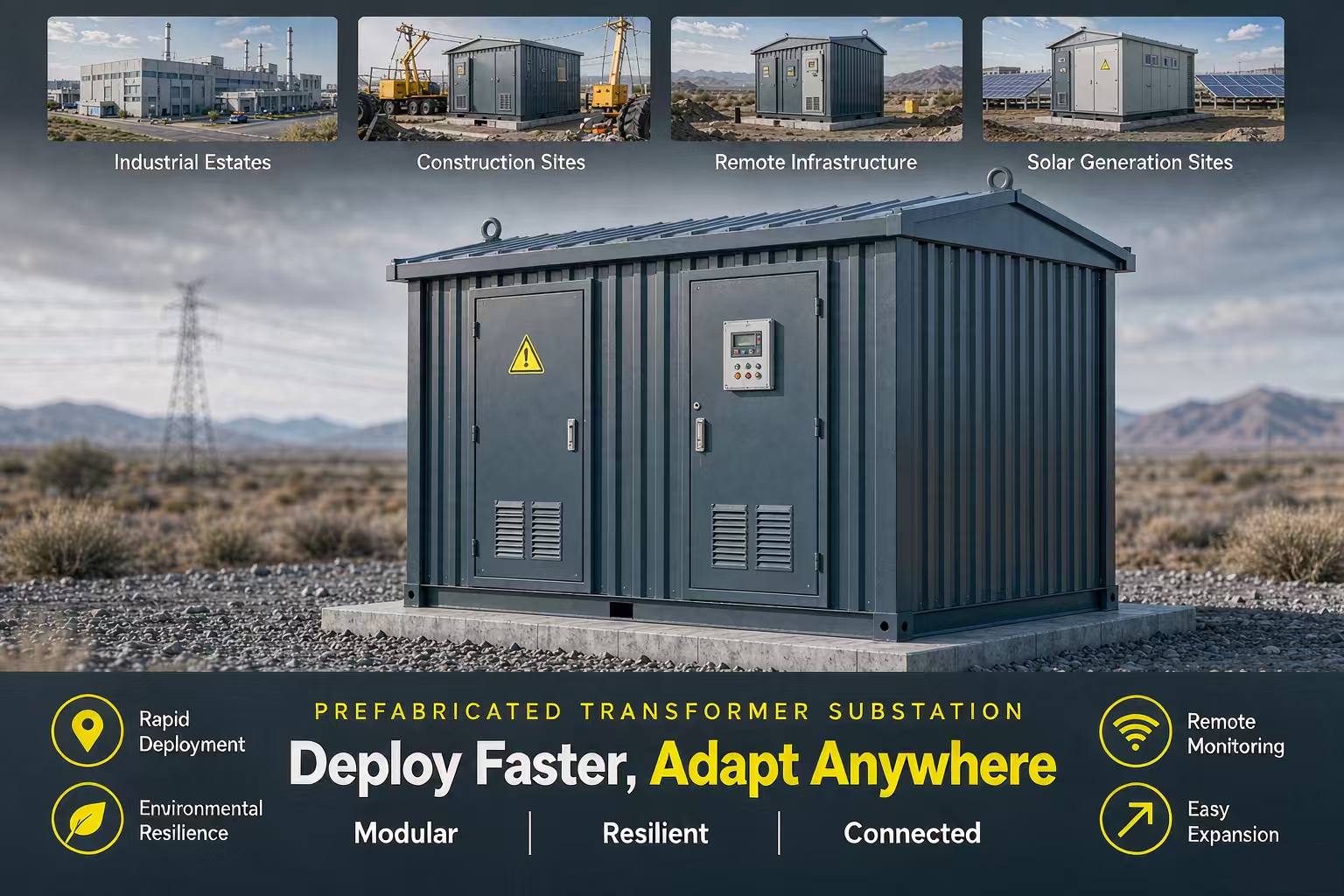
Environmental Stress Is Reshaping Electrical Equipment Design Requirements
Operating Environments Are Becoming a Critical Design Consideration
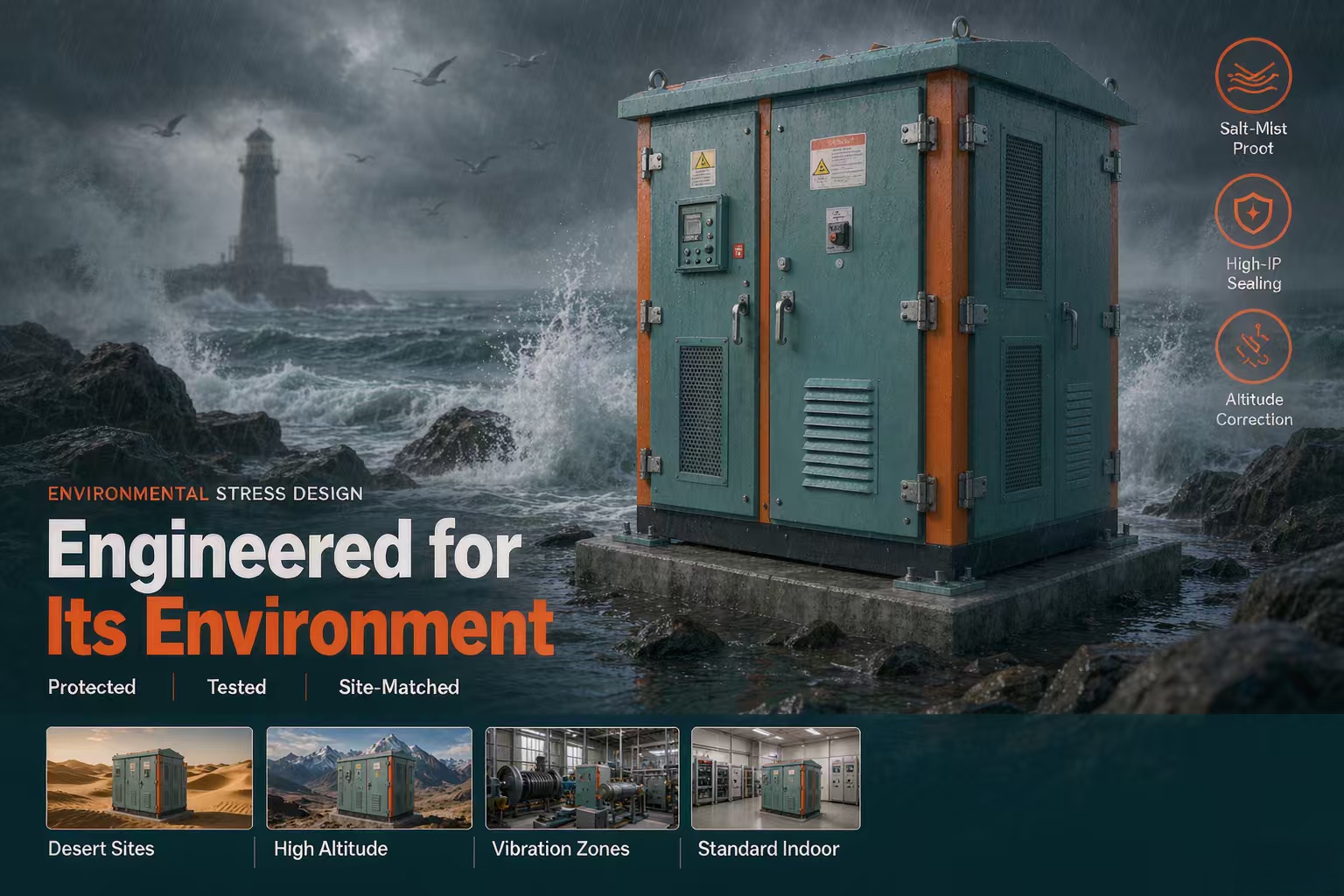
Electrical equipment is increasingly installed in locations where temperature, humidity, altitude and atmospheric pollution create different operating challenges. Coastal substations, desert installations, mountain infrastructure and industrial facilities may experience environmental conditions that differ substantially from conventional indoor applications. These factors can influence insulation performance, heat dissipation, contact reliability and equipment ageing.
The International Electrotechnical Commission's IEC Guide 111-1:2023 provides common environmental recommendations for high-voltage substation equipment. Its reference conditions include an altitude of up to 1,000 metres and an ambient temperature of up to 40°C. Installations outside these conditions require additional consideration during equipment specification and engineering design. (IEC)
Combined Heat and Humidity Affect Equipment Reliability
High temperatures increase thermal stress on insulation materials, electrical connections and electronic components. Meanwhile, high humidity and sudden temperature changes can produce condensation inside electrical enclosures, increasing the risk of insulation deterioration and metal corrosion.
The IEC 60068-2-78:2025 standard establishes a test method for assessing equipment resistance to sustained high humidity at constant temperature without condensation. For installations experiencing condensation, additional environmental assessment and appropriate heating, ventilation or dehumidification measures may be necessary. (IEC)
Coastal and Dusty Environments Require Specialized Protection
Salt-laden air can accelerate corrosion of metal enclosures, terminals and structural components. The IEC 60068-2-11:2021 salt-mist test evaluates the corrosion resistance of materials and protective coatings, including coating consistency and potential defects. This is particularly relevant for electrical installations near coastlines and offshore facilities. (IEC)
In dusty environments, enclosure protection and thermal management must be considered together. IEC 60529 defines the IP classification system for protection against solid-particle and water ingress. Selecting an appropriate IP rating can reduce contamination risks, although enclosure design must also preserve sufficient heat dissipation.
Altitude and Vibration Influence Equipment Configuration
At higher elevations, lower atmospheric pressure can reduce the dielectric strength of air, affecting external insulation clearances. IEC 62271-1:2017+A1:2021 includes altitude correction considerations above 1,000 metres for high-voltage switchgear. Equipment may therefore require adjusted insulation coordination and, where applicable, rated-performance derating. (IEC)
For equipment installed near heavy machinery, transportation systems or vibrating structures, mechanical durability also deserves attention. IEC 60068-2-6:2007 provides a sinusoidal vibration test method for evaluating mechanical weakness and performance degradation. (IEC)
Equipment Selection Moves Toward Site-Specific Engineering
Modern electrical equipment selection increasingly requires an assessment of multiple environmental factors rather than relying on standard catalogue specifications alone. Temperature, humidity, altitude, corrosion exposure, dust and mechanical vibration should be evaluated together with electrical ratings, insulation design and maintenance requirements.
The future development of electrical infrastructure will therefore place greater emphasis on environmental testing, customized protection strategies and lifecycle monitoring. Matching equipment design to actual operating conditions is becoming essential to maintaining long-term safety and reliability.