




From Scheduled Maintenance to Condition-Based Monitoring: A Shift in Electrical Asset Management
Equipment Age Does Not Always Reflect Actual Condition
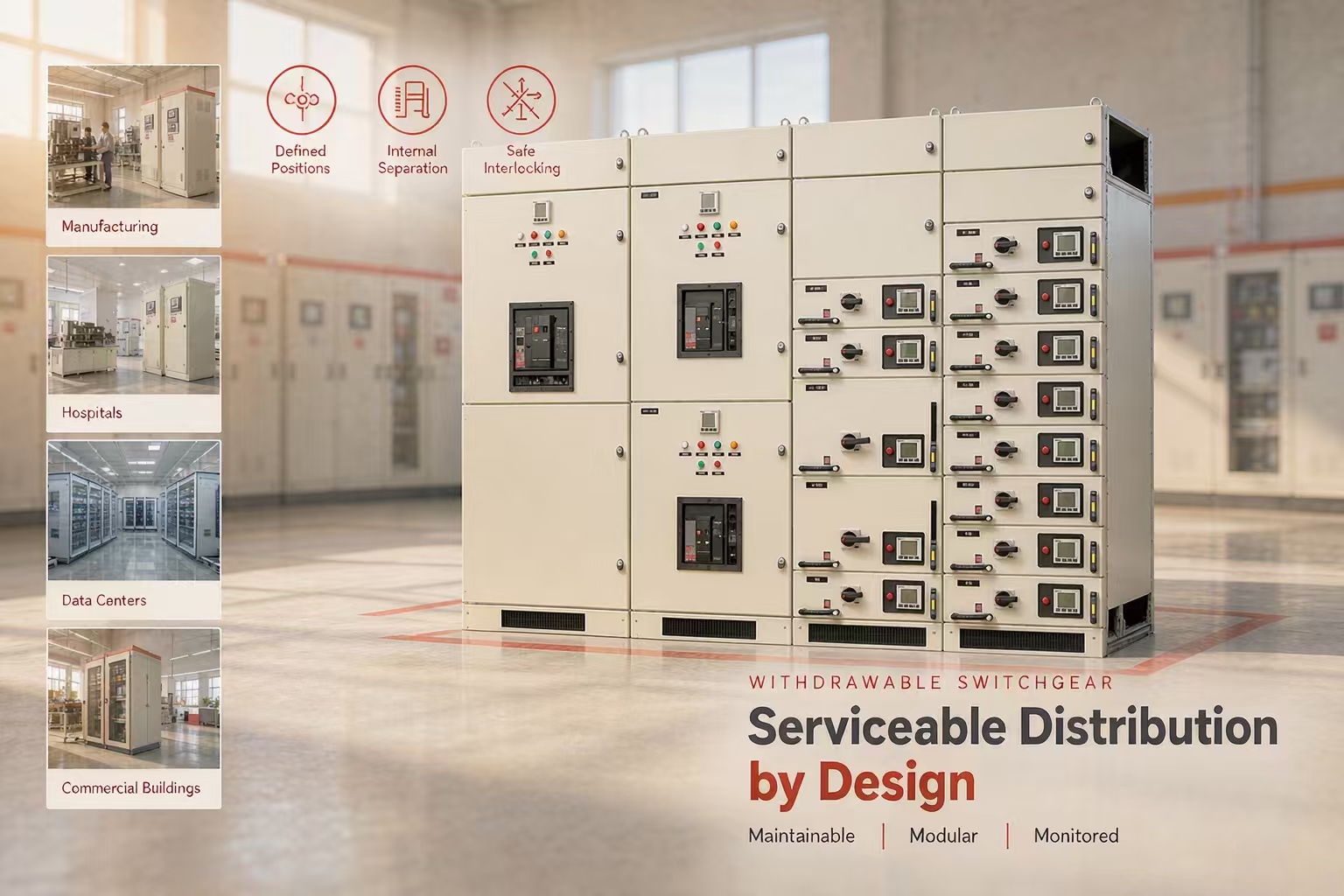
Electrical asset management is gradually moving beyond maintenance schedules based solely on elapsed time. In substations, factories and commercial distribution facilities, equipment operating under different loads and environmental conditions can experience very different rates of deterioration, even when installed in the same year. The International Electrotechnical Commission’s IEC TR 63482:2024 recognizes scheduled, condition-based and predictive maintenance as distinct approaches for low-voltage switchgear assemblies rated up to 1,000 V AC or 1,500 V DC. (IEC)
Temperature Changes Provide Early Warning Signals
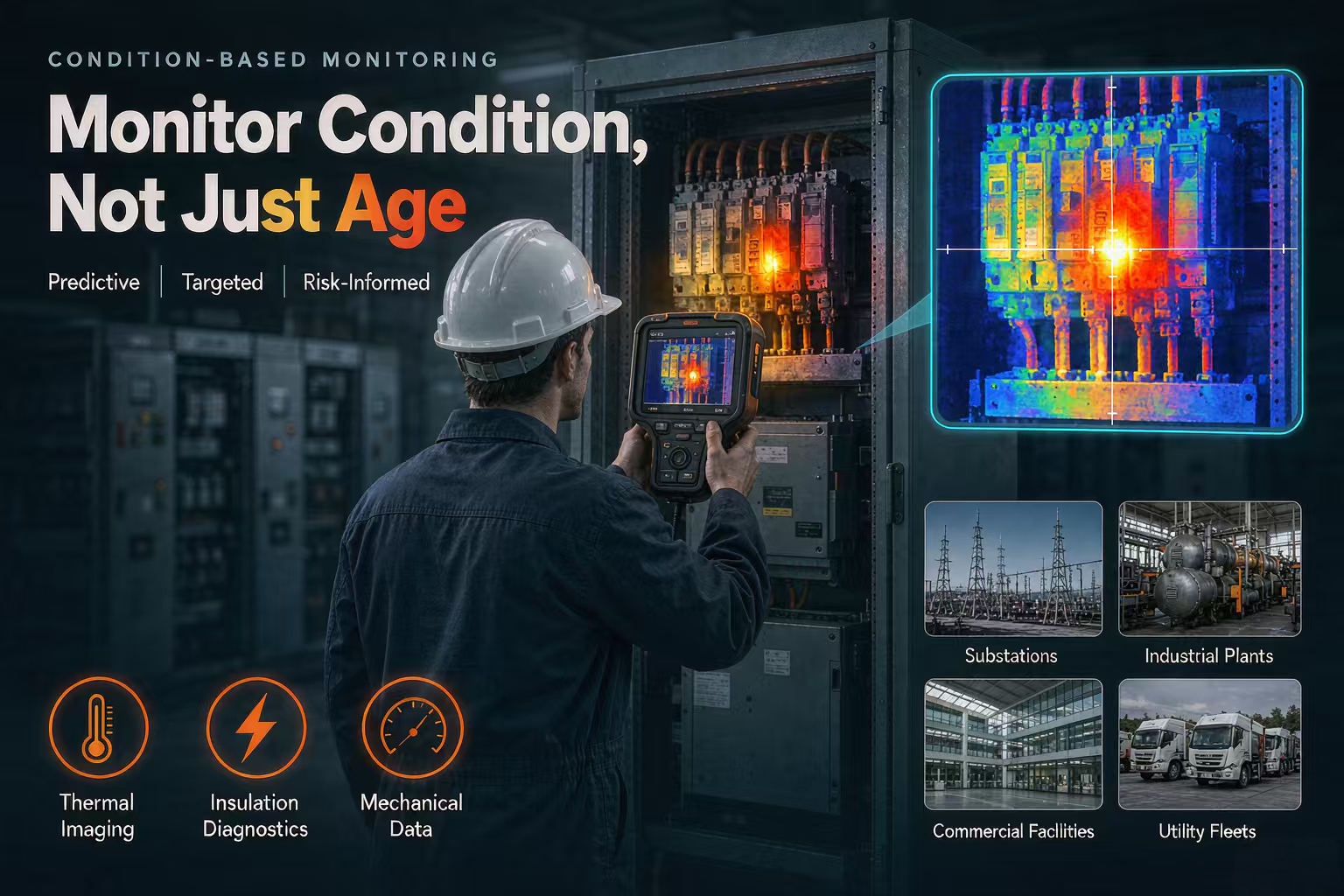
Electrical connection points are an important starting point for condition monitoring. Loose, corroded or deteriorating contacts can develop increased electrical resistance, producing localized heat under load. Infrared thermography can identify abnormal temperature patterns before they progress into more serious failures. However, readings should be evaluated alongside load levels, ambient temperature and historical measurements rather than interpreted in isolation. (U.S. Department of Energy)
Insulation condition requires a different approach. Partial discharge monitoring can help identify developing defects in insulation systems, while parameters such as gas pressure and density may support condition assessment in gas-insulated equipment. These measurements provide information about deterioration that cannot always be established through visual inspection alone. (IEC Smart Energy Roadmap)
Mechanical Data Adds Another Dimension
Switchgear condition also depends on mechanical performance. Operating-cycle counts, opening and closing times, contact separation speed and changes in operating mechanisms can help reveal wear or developing faults. A 2026 technical study covering 30 gas-insulated switchgear installations examined approximately 900 outage requests from 2020 to 2023, finding that scheduled and unscheduled requests were nearly evenly divided within the studied fleet. The findings illustrate why maintenance planning benefits from combining service schedules with equipment-condition evidence. (CIGRE, 2026)
Predictive Maintenance Supports More Targeted Inspections
By combining temperature trends, insulation diagnostics, mechanical records and operating history, data-analysis systems can identify changes that warrant further investigation. Maintenance teams can then prioritize inspections according to equipment condition and operational risk, potentially reducing unnecessary site visits while directing resources toward assets that need attention.
Condition-based monitoring does not eliminate periodic inspections or mandatory safety checks. Instead, it complements established maintenance procedures with additional evidence. The direction of electrical asset management is increasingly toward risk-informed decisions that consider actual operating condition, equipment criticality and lifecycle cost rather than age alone.