Power Conversion Systems Become Critical to Flexible Modern Distribution
Converting Stored Energy into Usable Electricity
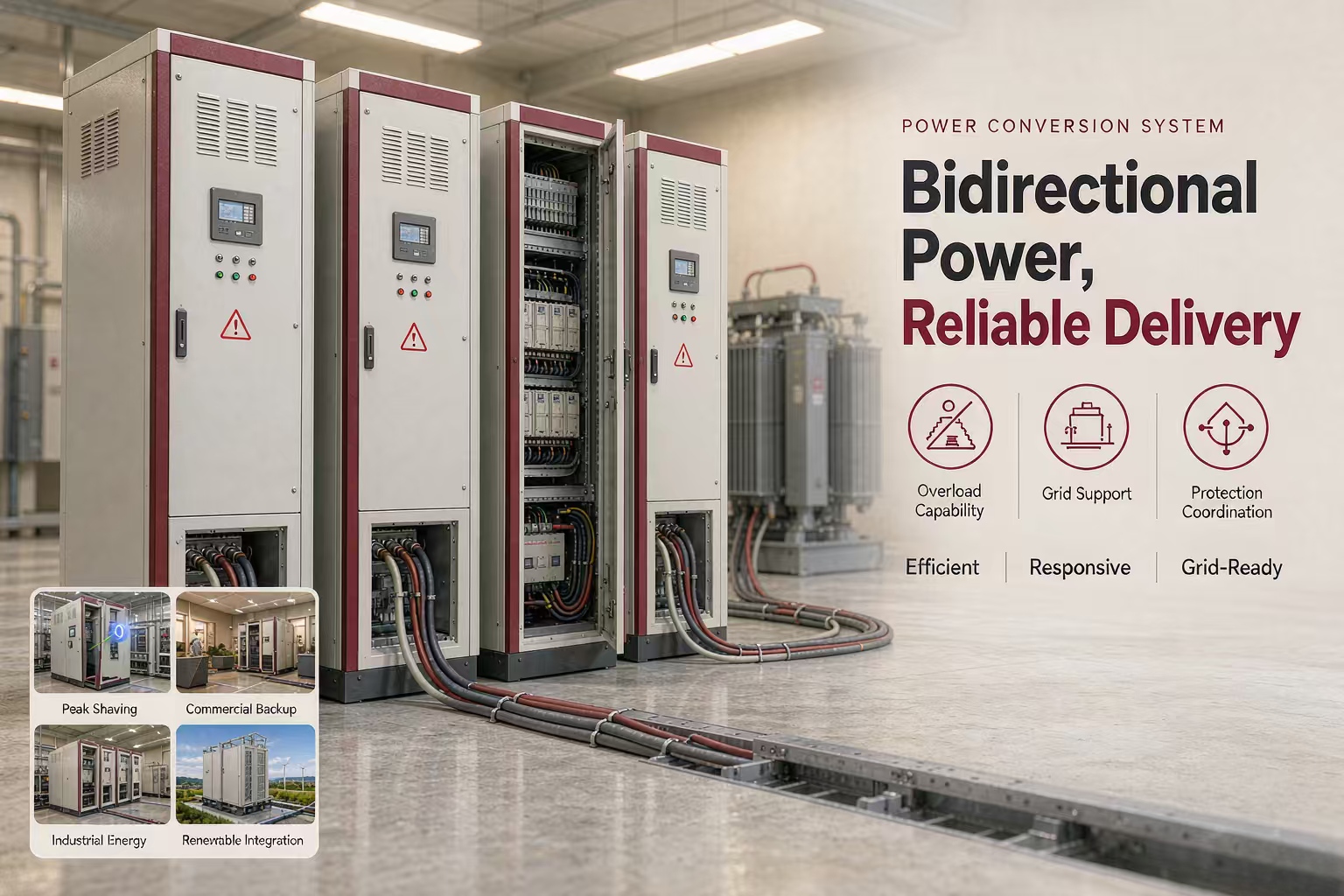
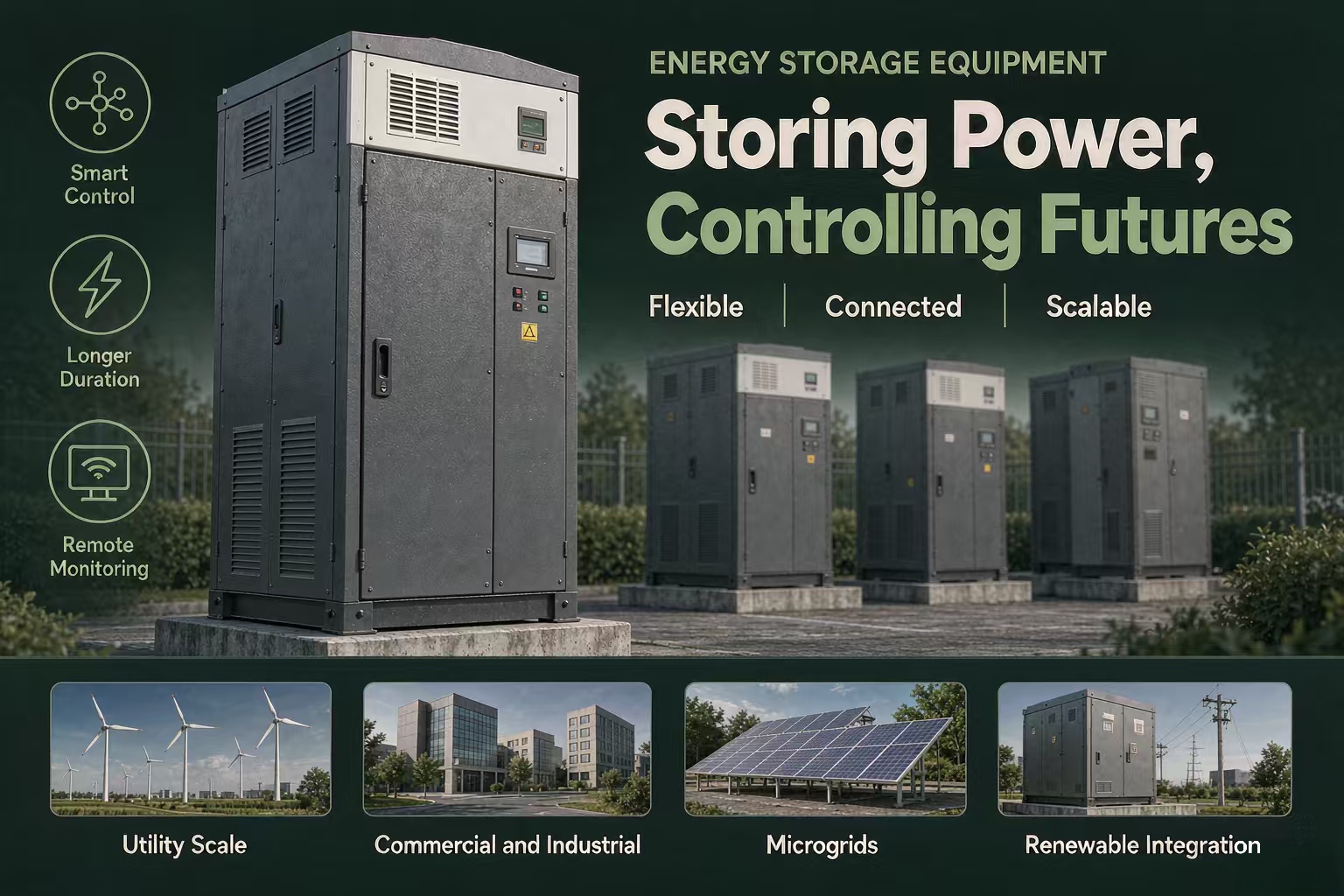
As commercial facilities, industrial operations and local electricity networks adopt battery storage, the Power Conversion System is becoming a critical component of modern distribution infrastructure. It manages the bidirectional conversion of electrical energy, allowing batteries to charge from the grid and discharge electricity when demand rises. According to the International Energy Agency, 108 GW of new battery storage capacity was deployed globally in 2025, approximately 40% more than in 2024. This expansion is increasing the need for converters capable of delivering reliable power under varied operating conditions. (IEA)
Rated Power Must Match Actual Operating Demands
Rated power determines how much electricity a converter can continuously transfer during charging and discharging. Commercial buildings may require systems designed around peak-demand reduction, while industrial facilities can need higher output to support production equipment. Grid-connected installations may also require reactive-power control and voltage support.
Selection should consider continuous active power, apparent power, operating power factor, conversion efficiency and the expected charging and discharging profile. A converter sized only for average demand may not provide adequate capacity during peak operating periods.
Overload Capability and Transient Loads Require Careful Evaluation
Some distribution sites experience sudden load changes when motors, pumps, compressors or other equipment start. The converter must therefore be assessed for overload magnitude, permitted duration, recovery time and transient response. These parameters vary by design and should be verified against the manufacturer's technical specifications rather than assumed from the rated power alone.
Inverter-based equipment also behaves differently from conventional synchronous generators during electrical faults. Research from the National Renewable Energy Laboratory notes that synchronous generators can produce approximately six times rated current during a fault, whereas converter-based equipment has current responses determined by its control strategy and hardware limits. This distinction makes fault-current contribution and protection coordination important considerations in system design. (NREL)
Grid Compatibility and Safety Shape Technical Requirements
For distribution-connected installations, technical evaluation includes voltage and frequency response, reactive-power control, power quality, interface protection and communication with supervisory controls. IEC TS 62786-3:2023 addresses grid-connection requirements for stationary battery-storage systems, including active-power response, voltage-related reactive-power response, monitoring and control. (IEC)
Safety is equally important. IEC 62909-1:2025 establishes general and safety requirements for bidirectional grid-connected power converters within its defined voltage scope. (IEC)
Applications Drive More Specialized Converter Designs
The Power Conversion System is used in peak-shaving installations, commercial backup systems, industrial energy management and distribution networks supporting renewable generation. Future development is expected to emphasize faster dynamic response, improved conversion efficiency, advanced grid-support functions and better monitoring.
Selecting the right converter therefore requires more than matching nominal power. Load transients, overload duration, protection settings, cooling conditions and the characteristics of the connected distribution network must be evaluated together to achieve dependable operation.